
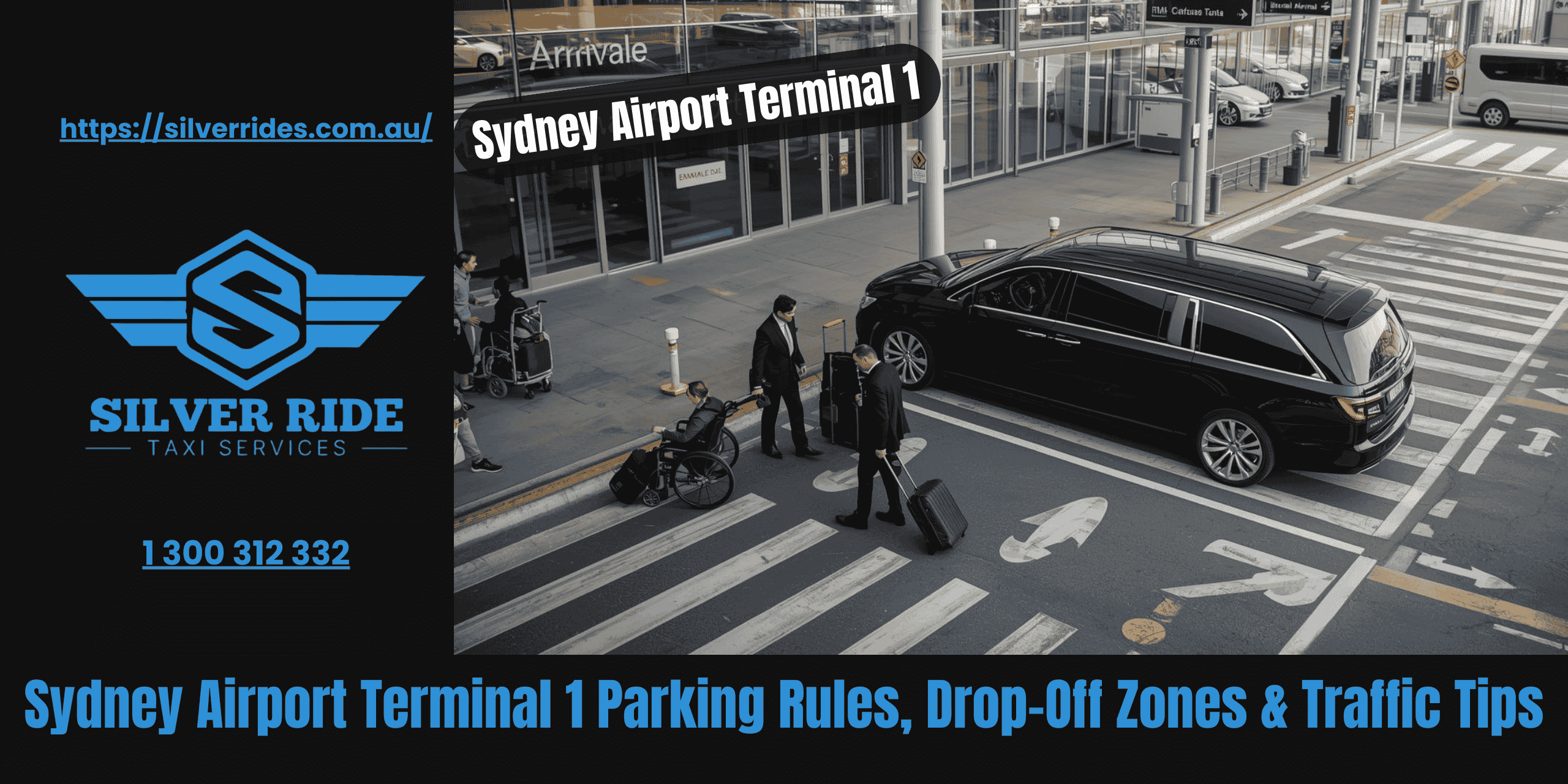
For many drivers heading to Sydney’s international terminal, the most stressful part of the journey begins well before check-in or security. Confusion around stopping areas, uncertainty about time limits, and concern over fines often surface as soon as vehicles approach the terminal roads—whether arriving in a private car or using an airport transfer Sydney service. Understanding Sydney Airport Terminal 1 parking rules in advance can significantly reduce that pressure and help the entire arrival process run smoothly.
Terminal 1 operates very differently from suburban car parks or even domestic terminals. Traffic flow is tightly managed, stopping is closely monitored, and enforcement is consistent. Drivers who arrive without clarity often feel rushed into poor decisions, while those who understand the system move through the terminal calmly and compliantly.
This guide explains how Terminal 1 functions from a driver’s perspective—covering parking rules, drop-off decisions, traffic behaviour, and real-world scenarios—so you arrive prepared rather than reactive.
How Terminal 1 Works Before You Reach the Kerb
Terminal 1 is designed for continuous vehicle movement, not waiting or last-minute decision-making. International flights operate throughout the day, keeping traffic volumes high and leaving little tolerance for disruption.
Because of this, Sydney Airport Terminal 1 parking rules prioritise predictability. Drivers are expected to decide before entering the terminal loop whether they are parking or using the kerbside drop-off. Hesitation or unscheduled stopping can quickly disrupt traffic flow and increase safety risks near the terminal frontage.
This expectation begins well before the terminal doors. Approach roads separate traffic streams early, requiring drivers to commit to their arrival method in advance. Missing these cues commonly results in:
- Missed parking entrances
- Kerbside stops with insufficient unloading time
- Sudden lane changes that trigger enforcement
Clear airport road signs indicate parking access, drop-off lanes, and restricted areas ahead of the terminal. Treating these approach roads as part of the compliance zone—not just the kerb itself—helps drivers avoid unnecessary violations.
Sydney Airport Terminal 1 Parking Rules Explained Clearly
At the heart of Terminal 1 operations is a strict separation between stopping and parking. Most fines occur when drivers treat these two actions as interchangeable. At the heart of Terminal 1 operations is a strict separation between stopping and parking, as outlined in the official Sydney Airport parking and transport guidelines.
1. Kerbside stopping rules
Stopping at the terminal kerb is permitted only for immediate passenger unloading. Drivers must remain inside the vehicle, and once passengers and luggage are on the footpath, the vehicle must depart without delay.
2. Parking requirement rules
Parking is mandatory whenever time, assistance, or uncertainty is involved. This includes helping passengers inside the terminal, handling extra luggage, or waiting for travellers to arrive.
3. Enforcement rules for drivers
Enforcement is based on location and duration, not intent. Fixed cameras and mobile patrols monitor dwell time continuously. Vehicles that exceed permitted limits or stop outside approved areas are fined without warning under Sydney Airport Terminal 1 parking rules.
Understanding these rule categories removes ambiguity and allows drivers to choose the correct option before reaching the kerb.
Drop-Off vs Parking: Making the Right Choice
The most important decision drivers make at Terminal 1 is whether kerbside access is appropriate or whether parking is the safer option. Choosing correctly upfront prevents rushed behaviour and unnecessary penalties. Making this decision in advance is essential, as Sydney Airport Terminal 1 parking rules leave little room for flexibility once a vehicle enters the terminal drop-off loop.
When kerbside drop-off works
Kerbside access is suitable only when the stop is genuinely brief and predictable. It works best when:
- Passengers are ready to exit immediately
- Luggage can be unloaded quickly
- The driver remains inside the vehicle
- No assistance inside the terminal is required
The terminal 1 drop-off zones are designed for fast turnover, not flexibility. Once passengers and belongings are on the footpath, drivers are expected to move on without delay.
When parking is the better decision
Parking should be chosen whenever there is uncertainty or the stop may take longer than expected. This includes situations where:
- Passengers need help with check-in or documents
- Elderly travellers or children are involved
- Luggage volume increases unloading time
- Timing is unclear or delayed
Attempting to extend a kerbside stop in these situations often leads to breaches of kerbside drop-off regulations. Parking removes time pressure and allows drivers to assist travellers without risking penalties.
Parking Options at the International Terminal
Parking at Terminal 1 is not a single option but a set of choices designed for different needs. Understanding these options before arriving helps drivers comply with the international terminal parking Sydney guidelines and avoid unnecessary stress.
Short-term parking near Terminal 1
Short-term parking terminal 1 is the most suitable option for drivers who need flexibility and time inside the terminal.
It works best when:
- You are escorting passengers to check in
- Additional time is required for documentation or baggage handling
- Travellers need assistance due to age or mobility
- Departure timing is uncertain
This option provides direct terminal access and removes the risk of overstaying in drop-off zones.
Long-term parking for international travel
International terminal parking in Sydney facilities is designed for travellers leaving vehicles for extended periods.
This option is appropriate when:
- You are departing on a multi-day international trip
- Predictable access matters more than proximity
- Vehicle security during travel is a priority
Long-term parking offers structured entry and exit points and is better suited to travellers who prefer certainty over convenience.
Why parking is often the safer choice
Many drivers underestimate how quickly kerbside limits are enforced. Parking removes dwell-time pressure entirely and allows drivers to focus on assisting passengers rather than monitoring the clock. In situations requiring flexibility, parking is often the most compliant choice under Sydney Airport parking guidelines.
1. Traffic Conditions That Affect Compliance
Traffic conditions significantly influence how strictly Sydney Airport Terminal 1 parking rules are enforced. As traffic density increases, tolerance for disruption decreases.
2. Morning international departure periods
High volumes of private vehicles, taxis, and professional transport increase congestion and enforcement visibility.
3. Evening arrival windows
Reduced road capacity during evening arrivals leads to closer monitoring of kerbside dwell times.
4. Holiday and peak hour traffic
During peak hour traffic and holiday periods, overall airport congestion Sydney drivers experience intensifies, leaving little margin for kerbside delays.
Allowing buffer time and avoiding busy periods where possible are among the most effective syd airport traffic tips for reducing stress and avoiding mistakes.
Chauffeur and Professional Transport Considerations
At Sydney’s international terminal, professional transport is less about speed and more about certainty. Terminal 1 operates under strict timing and access controls, leaving little room for improvisation once a vehicle enters the precinct. For international travellers, a controlled, predictable drop-off experience often matters more than having multiple transport options.
How professional chauffeur services handle Terminal 1 differently:
- Drop-offs planned around Terminal 1 access rules rather than on-arrival decisions
- Drivers are trained to operate within strict unloading and departure windows
- Clear understanding of chauffeur lane access and enforcement patterns
- Passenger unloading was managed efficiently to avoid kerbside delays
This is where services such as SilverRides, a Sydney-based chauffeur and airport transfer provider, become relevant. Rather than treating Terminal 1 as a generic airport stop, SilverRides structures chauffeur drop-offs around how the international terminal actually functions. That operational clarity allows passengers to arrive without confusion at the kerb and without last-minute decisions that often lead to delays or compliance issues under the chauffeur drop-off Sydney Airport procedures.
Common Mistakes That Lead to Fines
Most penalties are not the result of reckless behaviour, but of small, avoidable misjudgements.
Common mistakes include:
- Waiting near the terminal entrance for arriving passengers
- Underestimating how long passenger unloading will take
- Attempting to assist travellers at the kerb instead of parking
- Assuming brief stops will be overlooked
In many cases, parking would have prevented the issue entirely. Recognising these patterns helps drivers avoid repeating them under Sydney Airport Terminal 1 parking rules.
How to Arrive at Terminal 1 Without Stress or Penalties
A smooth experience at Sydney Kingsford Smith Airport begins with preparation rather than proximity.
Before entering the airport precinct, decide whether your stop will be brief or flexible. Choose parking when any uncertainty exists. Once on terminal roads, follow signage early, maintain lane discipline, and avoid hesitation.
By respecting Sydney Airport Terminal 1 parking rules, planning around traffic conditions, and matching your arrival method to your situation, you move through Terminal 1 with confidence rather than urgency.
Before your next international departure, ask yourself one simple question:
Do I need speed, or do I need time?
That answer determines whether kerbside drop-off or parking is the right choice—and whether your arrival feels controlled or chaotic.